
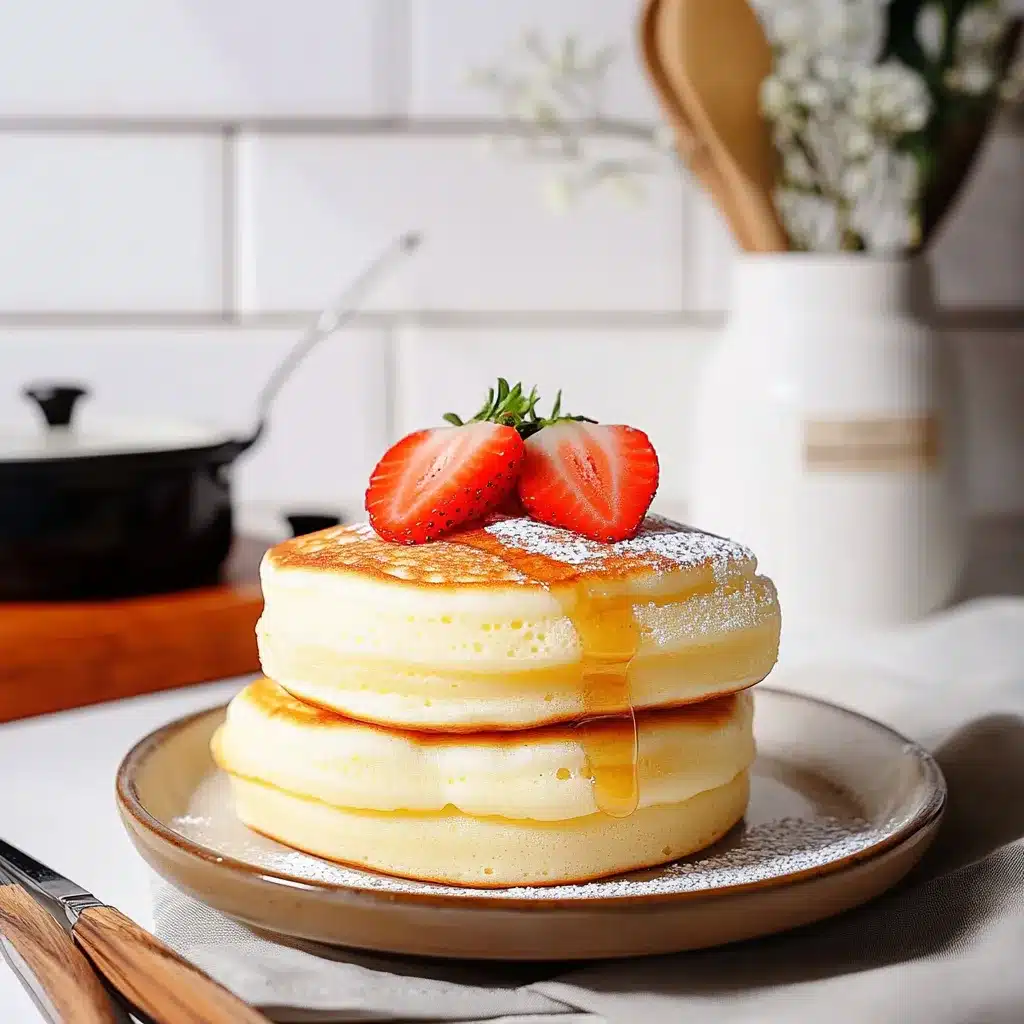

If you’ve ever chased the cloudlike magic of Japanese soufflé pancakes, you’re in the right kitchen. Today I’m sharing a cozy, step-by-step take on Japanese soufflé pancakes that rise tall, stay tender, and melt into breakfast bliss with a gentle sweetness. These pancakes are your morning mood-boost, a brunch-showstopper, and a comforting treat all at once, especially when you top them with a dab of butter and a kiss of syrup.
This guide to Japanese soufflé pancakes blends careful technique with warm, homey flavor. You’ll learn how to craft the delicate meringue, how to fold it just right into a velvety yolk base, and how to cook the batter slowly so each pancake lifts into a generous lazy-stack that looks as soft as a cloud. If you’re aiming for Instagram-worthy pancakes that still feel like a hug, you’ve found the perfect recipe to pin and cook tonight.
Table of Contents

Ingredients
- 6 large eggs, separated (reserve the yolks for the batter and the whites for the meringue) — fresh eggs yield the best volume and stability for this Japanese soufflé pancakes recipe.
- 180 ml whole milk (or a plant-based milk if you prefer) — dairy helps the batter stay creamy and the surface glossy.
- 60 g all-purpose flour — you can substitute with a gluten-free blend if needed, though the texture may shift slightly.
- 20 g cornstarch — this helps create that light, airy structure without weighing the batter down.
- 40 g granulated sugar (divided) — some goes into the yolk mixture, and some goes into the meringue to stabilize the foam.
- 1 tsp vanilla extract — a gentle kiss of warmth that complements the pancake’s milky sweetness. If you love citrus, a pinch of lemon zest can brighten the finish.
- 1/4 tsp cream of tartar (or a pinch of salt) — stabilizes the egg whites for maximal volume and a firmer set.
- Pinch of salt — enhances sweetness and balances the batter’s flavors.
- Butter or neutral oil for greasing the pan — you want a nonstick surface so the pancakes lift evenly.
- Maple syrup, powdered sugar, fresh berries, or whipped cream for serving — toppings that highlight the pancake’s delicate flavor.
Notes and tips for the ingredients: room-temperature eggs whip to greater volume, so take them out about 20–30 minutes before you start. If you’re dairy-free, the blend of almond milk with a touch of melted coconut oil can work, but the texture may be a touch different. For a slightly lighter batter, you can whisk in a tablespoon of neutral-tavored sparkling water to lighten the mix just before folding in the meringue. And if you’re craving extra flavor, a whisper of cinnamon or matcha powder can transform Japanese soufflé pancakes into a new, exciting version without losing that cloud-like texture.
The key to these pancakes is balancing sweetness and airiness, so you’ll notice I’ve kept the sugar measured and precise. If you prefer a less sweet pancake, you can cut sugar by a tablespoon, but keep in mind that the meringue will help with the structure, so don’t skip it entirely. For readers exploring gluten-free options, a high-quality gluten-free flour blend can be substituted in equal parts for the all-purpose flour, though the final result might be a touch denser and more delicate. If you’re curious about similar, lighter pancake ideas, you might enjoy our guide on fluffy stacks that teach you how to achieve lift in every bite. You can also browse other delicate pancake ideas for inspiration, such as a classic pancake variation that champions airy textures. And if you’re planning ahead, a quick look at how to store pancakes for the week can be handy as you plan breakfast prep for busy mornings here.

Instructions
- Set up a clean, dry bowl for the egg whites and a separate bowl for the yolk mixture. You’ll separate the eggs carefully so you don’t carry any yolk into the whites. This is essential for the Japanese soufflé pancakes’ peak formation.
- Whisk the yolks with 60 ml of milk, vanilla extract, and half of the sugar until pale and creamy. The goal is a pale, luxurious yolk base that will welcome air when folded with the whipped whites.
- Whisk in the flour and cornstarch, then slowly whisk in the remaining milk until the batter is smooth and free of lumps. The texture should be slightly thick but still pourable, a hallmark of the best Japanese soufflé pancakes.
- In a separate bowl, beat the egg whites with cream of tartar and a pinch of salt until soft peaks form. Gradually add the remaining sugar and beat until stiff, glossy peaks hold their shape. Proper meringue is the heart of these fluffy pancakes.
- Fold a third of the whipped whites into the yolk mixture to lighten it, then fold in the remaining whites carefully. The key is to fold—don’t whisk—so you preserve the air that makes the pancakes rise tall in the pan.
- Heat a nonstick skillet over very low heat and lightly grease with butter. If you’re using rings (recommended for tall stacks), set them down and brush a little butter inside each ring.
- Scoop the batter into the rings, filling about halfway to allow room for rising. Place the rings close together but not touching, to create a cluster of fluffy discs.
- Cover the pan with a tight-fitting lid and cook for about 6–8 minutes, or until the bottom is a pale golden and the tops begin to set. You should see the batter puff slightly around the edges as it cooks through.
- Carefully flip the pancakes (or invert the rings and flip the discs) and cook for another 3–5 minutes, until the other side is golden and the centers are set and puffed. The surface should spring back when gently pressed.
- Remove from heat and let rest for a minute before stacking. The stack stays tender and soft, a true signature of Japanese soufflé pancakes when plated with a little butter and syrup.
Visual cues to guide you: the batter should look glossy and airy, the edges around the rings will pull back slightly as they cook, and the tops will bloom into gentle domes. If the center looks a little wobbly but the outer ring is set, that’s a sign you’re a whisk or fold away from pancake perfection. For extra depth of flavor, finish with a light dusting of powdered sugar and a drizzle of maple syrup, which beautifully complements the pancake’s soft sweetness. If you want to explore more on how to achieve peak egg-white volume, see our guide on whipping egg whites to stiff peaks, which explains the science behind this technique in simple terms. And if you’d like a deeper dive into even taller stacks, our article on creating impressive pancake towers offers additional tips and flavor ideas.
As you plate, think about contrast: the gentle sweetness inside pairs beautifully with a pat of butter that melts into the nooks of the pancakes. For a bright finish, a handful of fresh berries or a citrus-y yogurt can balance the richness. If you’re practicing for a brunch or a Pinterest-worthy table, plan the layout ahead of time so the stack looks as good as it tastes, and consider adding a few edible flowers for a delicate, photo-ready touch that makes your Japanese soufflé pancakes shine in photos and in person.
Tips & Variations
- Texture tweaks: If you prefer a firmer outer crust, let the pancakes cook on low heat for a minute longer before flipping. If you want them even softer, reduce cooking time slightly and keep the lid on; a gentle steam helps maintain moisture inside.
- Flavor swaps: Add a teaspoon of matcha powder to the yolk mixture for a green-tea twist that still keeps the airy structure, or fold in a tablespoon of cocoa for a chocolatey version that remains light and elegant.
- Gluten-free option: Use a high-quality gluten-free flour blend in place of all-purpose flour. The pancake texture will be delicate and slightly lighter in some blends, but still wonderfully fluffy.
- Non-dairy approach: Substitute dairy milk with almond milk or oat milk and add a splash of melted plant-based butter to mimic the richness. The meringue will still whip nicely, but the overall mouthfeel may be a touch different.
- Storage and reheating: Leftovers can be stored in the fridge for up to 2 days, but best when fresh. To reheat, warm in a low oven (about 300°F / 150°C) for a few minutes or reheat gently in a skillet with a splash of water to help re-steam and fluff the surface.
- Syrup and toppings: Classic maple syrup is a perfect match, but you can also use lemon curd, berry compote, or a light yogurt drizzle to vary flavor notes without overpowering the pancakes’ delicate profile.
For a deeper dive into flexible pancake methods, you may enjoy exploring how to adapt batter for different dietary needs while preserving height and tenderness. Our guide on gluten-free pancake ideas offers insights into ensuring a soft texture without sacrificing lift. If you prefer more texture variety, you might like to pair the pancakes with a crunchy element such as toasted nuts or coconut threads, which adds a pleasant contrast to the otherwise cloud-soft bite. For more inspiration on pairing and plating, check out our post about plating pancakes with style here.

Serving Suggestions
Turn your fluffy Japanese soufflé pancakes into a complete morning or weekend brunch by pairing them with a few bright, complementary sides. A small bowl of vanilla yogurt or a spoonful of lemon curd adds a tangy lift that balances the pancake’s sweetness, while fresh berries provide a crisp, fresh contrast. If you’re planning a bigger table, consider offering both maple syrup and a light fruit compote so guests can mix textures and flavors as they stack.
For a savory-sweet hybrid, try a soft scramble alongside the stack or a plate of lemon-scented ricotta and herbs. The contrast between the airy pancakes and the creamy, savory elements can be surprisingly addictive and distinctly memorable for guests. Think of this as a platform for your favorite brunch flavors: a dollop of whipped cream or mascarpone can elevate the experience, while a drizzle of good honey adds floral complexity that beautifully complements the vanilla notes in the batter. If you want to see more ideas for delicious accompaniments, you might enjoy reading about classic sauces that pair well with pancakes in our creamy custard guide and think about how a light citrus glaze could brighten your plate without overpowering the pancakes themselves.
To keep things visually appealing for Pinterest, arrange the stack in a tall, well-aligned tower with a single fork resting nearby, a little pat of butter on top that slowly melts, and a few fresh berries scattered around. A simple dusting of powdered sugar can complete the picture without overwhelming the delicate surface. If you’re serving a crowd, consider making a few mini stacks that are easy to photograph and share, as the golden domes against a white plate look especially inviting in photos.
Whether you’re new to Japanese soufflé pancakes or you’ve been chasing their airy magic for a while, these serving ideas help you present your pancakes with elegance and simplicity. For more plating inspiration and pairing ideas, you can explore our guide to creating a cohesive brunch board that harmonizes textures, colors, and flavors, which includes tips on arranging guests’ plates for easy photographing here. Also, if you’re curious about other delicate breakfast options that stay fluffy in a stack, our article on a lighter pancake approach provides additional context and ideas.

FAQs
Can I make Japanese soufflé pancakes without a ring mold?
Yes, you can. If you don’t have ring molds, you can spoon the batter into small, well-greased wells of a nonstick pan or use parchment paper cut into circular shapes as makeshift molds. The key is to keep the batter contained so the edges lift and rise evenly, preserving the characteristic height of Japanese soufflé pancakes. The result will still be airy and soft, though the shapes may be a touch more freeform than perfectly round discs.
How do I know when the pancakes are fully cooked through?
The outer surfaces should be a light golden color, and the centers should be set but still springy to the touch. If you gently press the top and it feels firm with a tiny bounce, the pancake is done. A gentle skewer test can help confirm there’s no wet batter in the middle. If you’re unsure, give the tops a little extra steam time under the lid for a minute or two, which can help finish cooking without drying out the edges.
Can I freeze Japanese soufflé pancakes?
They freeze best when fully cooled and stored in a single layer on a parchment-lined tray before transferring to a freezer-safe bag. To reheat, warm in a low oven or toaster oven to revive the fluffy texture and a hint of warm aroma. Expect a slight change in texture after freezing, but the pancakes can still be quite enjoyable with a fresh splash of syrup and fruit on top.
What if my egg whites don’t whip to stiff peaks?
Truthfully, a few factors influence whip volume: room temperature whites whip more effectively, the absence of yolk, and a clean, dry bowl. Make sure there’s no trace of oil or egg yolk on the beater or inside the bowl, and consider starting with a fresh set of eggs. If you’re in a high-humidity environment, you might need to beat a bit longer or incorporate a touch more cream of tartar to stabilize the foam. The more stable your meringue, the higher your pancakes will rise.
How can I keep the texture silky when I’m adding toppings?
A light glaze or fruit coulis can complement a soft interior without weighing it down. If you want to maintain a silky surface, avoid overly heavy syrups or thick toppings that sink into the batter. A dollop of yogurt, a drizzle of warm maple syrup, and a scattering of berries preserve the delicate contrast between the airy pancake and the glossy finish.
Do Japanese soufflé pancakes taste best when served immediately?
They’re at their very best when fresh, warm, and just-off-the-griddle. The moment they cool, the airiness can begin to recede as the interior settles. If you anticipate a longer wait, keep the pancakes covered in a warm, low oven for a short period to maintain the soft interior, then serve promptly. This approach helps preserve the distinctive lightness and texture that makes Japanese soufflé pancakes so memorable.
Final Thoughts
With a few patient folds, careful heat, and a love of light textures, you can create Japanese soufflé pancakes that feel as cozy as a morning hug and as photogenic as a brunch spread on Pinterest. They’re a comforting, celebratory dish that invites you to slow down, savor the process, and appreciate the soft rise of each pillow-like pancake. As you plate and garnish, remember that the magic lies in the air you whipped into the batter, the gentle steam that smoothes the surface, and the quiet joy of sharing something that feels almost magical with friends and family. If you’re ever in doubt, return to the fundamentals: well-whipped whites, careful folding, steady low heat, and a hot, loving pan ready to cradle those puffy disks into their most charming ascent.
There’s something wonderfully comforting about Japanese soufflé pancakes—their height, their tenderness, and their bright, simple flavor. They’re a testament to how a few precise steps can produce something surprisingly grand from a few, well-chosen ingredients. I hope this recipe inspires you to gather around the stove, share a laugh, and stack up a few fluffy rounds that feel like little clouds on your plate. And if you recreate them for friends or family, you’ll probably see a few delighted faces, a few phones raised for photos, and a few tips spilled as someone eagerly asks for your pancake secrets. After all, this is the kind of dish that invites conversation, warmth, and a little extra sweetness in the morning.
Print
Japanese souffl pancakes a fluffy breakfast delight recipe
- Total Time: 45 minutes
- Yield: 4 servings 1x
Description
Elevate Japanese souffl pancakes with airy textures practical tips and a quick guide for weekend treats plus stepbystep prep and smart storage ideas
Ingredients
Instructions
Notes
A cozy, step-by-step guide to Japanese soufflé pancakes that rise tall, stay tender, and melt into breakfast bliss, topped with butter and syrup.
- Prep Time: 20 minutes
- Cook Time: 25 minutes
- Category: Breakfast
- Cuisine: Japanese
Nutrition
- Serving Size: 4 servings
- Calories: 320 kcal
- Sugar: 18 g
- Fat: 14 g
- Carbohydrates: 38 g
- Fiber: 1 g
- Protein: 12 g


